
Running a Sex Offender Check in Lee County
The Texas Public Sex Offender Registry is the main public channel for a Lee County sex offender check. Texas DPS compiles data sent by local registration authorities and offers name and geographic routes. Lee County does not publish a separate sheriff map that should replace the state system. Start with DPS, then call the Lee County Sheriff's Office when a registration or compliance question needs local confirmation.
Searches work best when the goal is clear. A known person calls for a name search and careful comparison of aliases and physical details. Neighborhood awareness calls for an address, city, ZIP code, county, or map view. A Lee County registry result describes a statutory registration record. It does not prove current custody, show every criminal case, or stand in for the broader criminal-history sources kept by courts and DPS.
Lee County Registry Office
Local law enforcement registers and verifies residents, sends the required data to DPS, and carries out notices required by Texas law. In Lee County, begin with the Lee County Sheriff's Office at 2122 FM 448 in Giddings. The main number is 979-542-2800. Public hours are Monday through Friday, 8 a.m. to 5 p.m., but Lee County does not publish a separate registration appointment schedule or fee.
Call before appearing. Staff can confirm the right time and local process without a wasted trip. Check the Sheriff's official site for current local notices, and use the Lee County homepage to confirm any office relocation before travel. The sheriff can also receive a report of suspected noncompliance. Give facts that help identify the concern, and use 911 only for an emergency. Registration staff are not the source for a general Texas rap sheet or a city police report. Those records remain with DPS or the agency that made them.
Lee County Sheriff's Office
2122 FM 448
Giddings, TX 78942
979-542-2800
Call first for registry appointment and verification details.
Searching the Texas Public Sex Offender Registry
DPS operates the free public registry for all Texas counties. The live interface controls which fields are required, and a CAPTCHA or terms screen may appear. Lee County searchers can move between name, geographic or address, higher-education, map, and list routes shown by the portal. Exact radius choices can change, so use the choices shown rather than relying on an old distance list.
- Open the official Texas DPS registry and review its conditions of use.
- Choose a name or geographic route. Select Lee County, or enter Giddings, Lexington, a ZIP code, or a known address when useful.
- Review the result list. Compare names, aliases, photographs, physical traits, and location details before deciding that a profile matches.
- Open the complete profile and read the offense, registration status, verification requirement, dates, address type, and registering agency together.
| Field or Control | Type | Required | Lee County Use |
|---|---|---|---|
| Search type | Tabs or options | One route | Choose name, address, geographic, or another displayed route. |
| Last and first name | Text | Route-dependent | Use known spellings and compare aliases in results. |
| Address and city | Text or select | Geographic route | Enter Giddings or Lexington when focusing on an incorporated city. |
| County and ZIP | Select and text | Optional | Select Lee to limit the geographic result set. |
| Radius | Dropdown | Address route | Use the live mile choices; no fixed choices are claimed here. |
| Map or list | View control | No | Switch presentation without treating a map pin as identity proof. |
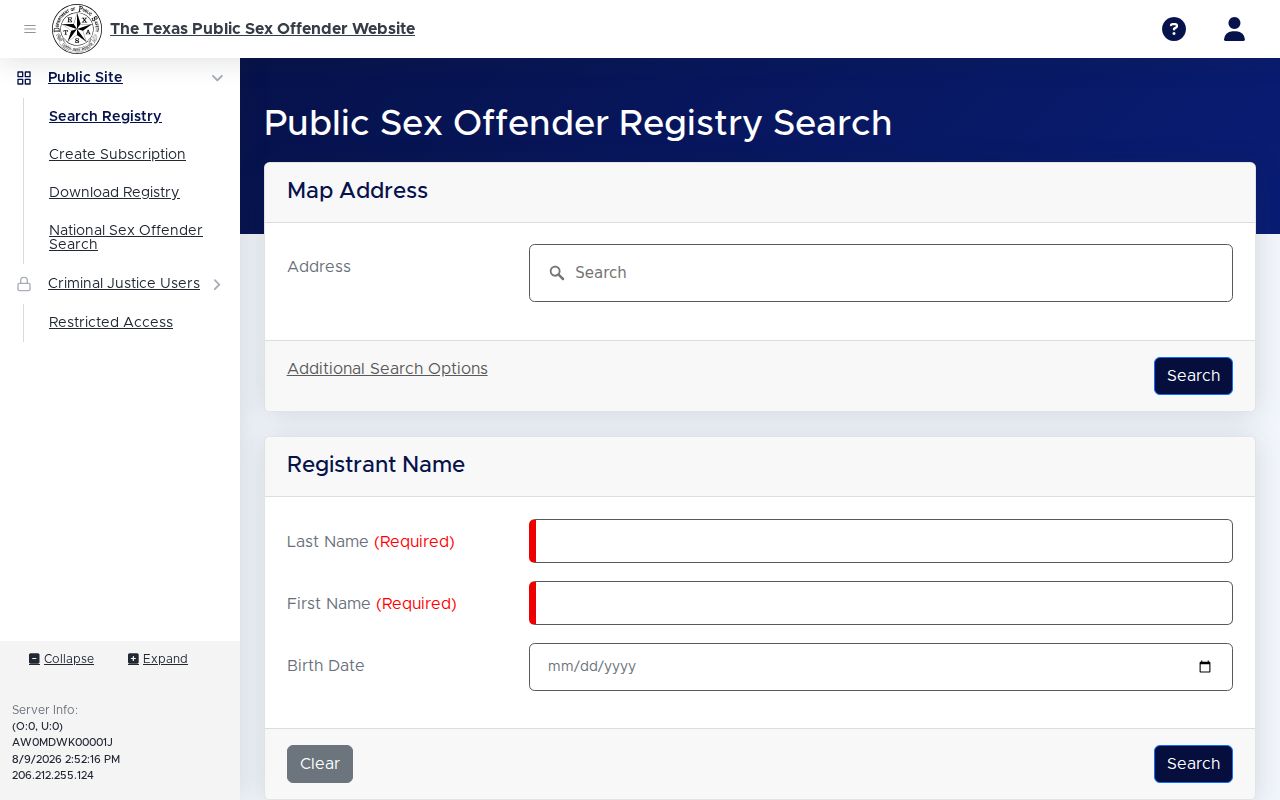
The official Texas registry interface presents the name, address, county, and map paths used for a Lee County search.
The interface shows why choosing the right search route comes before interpreting any Lee County result.
Note: A geographic search reflects reported registration data, so confirm the profile details and dates before relying on a map position.
Lee County Map Versus Name Search
A name search answers one kind of question. It is useful when a person is known and the searcher can compare aliases, birth information, physical details, and the current photograph. A map or address search answers another. It helps a family review the area around a home, school route, park, or other place in Giddings, Lexington, or rural Lee County.
Neither route is complete by itself. A name may be spelled in more than one way. An address may be described as a residence, temporary location, or another type shown on the profile. People can also move across county or state lines. Search Lee County first when the concern is local, then widen the geography if the known facts suggest another place. Do not infer that a person is unregistered merely because one narrow spelling or map view returns no match.
What a Registry Profile Shows
A public Lee County registry profile combines identity, address, offense, and reporting information. It can include a name and aliases, current photograph, physical traits, scars or tattoos, a state identification number, map, offense and statute, conviction or adjudication date, registration status, verification data, risk level, and the agency responsible for registration. Some profiles may also carry vehicle or supervision information where Texas law permits public release.
| Name and Aliases | Reported names used to distinguish likely matches and spelling variants. |
|---|---|
| Photo and Description | Current public photograph plus sex, race, ethnicity, age, build, hair, eyes, and identifying marks when available. |
| Address and Map | Reported address, address type, and mapped location for geographic review. |
| Offense Record | Offense description, statute, and conviction or adjudication date, with victim categories only where authorized. |
| Status and Verification | Registration status, required verification cycle, key dates, risk level, and registering agency. |
| Other Public Data | SID, vehicles, and supervision or incarceration indicators in statutorily covered cases. |
The DPS registry profile layout provides the frame for these fields without requiring an individual profile to be republished.
The field layout helps a Lee County reader separate identity data, offense facts, address details, and verification status.
The Texas criminal-history dissemination law helps show why a registry profile and a general DPS history are separate products.
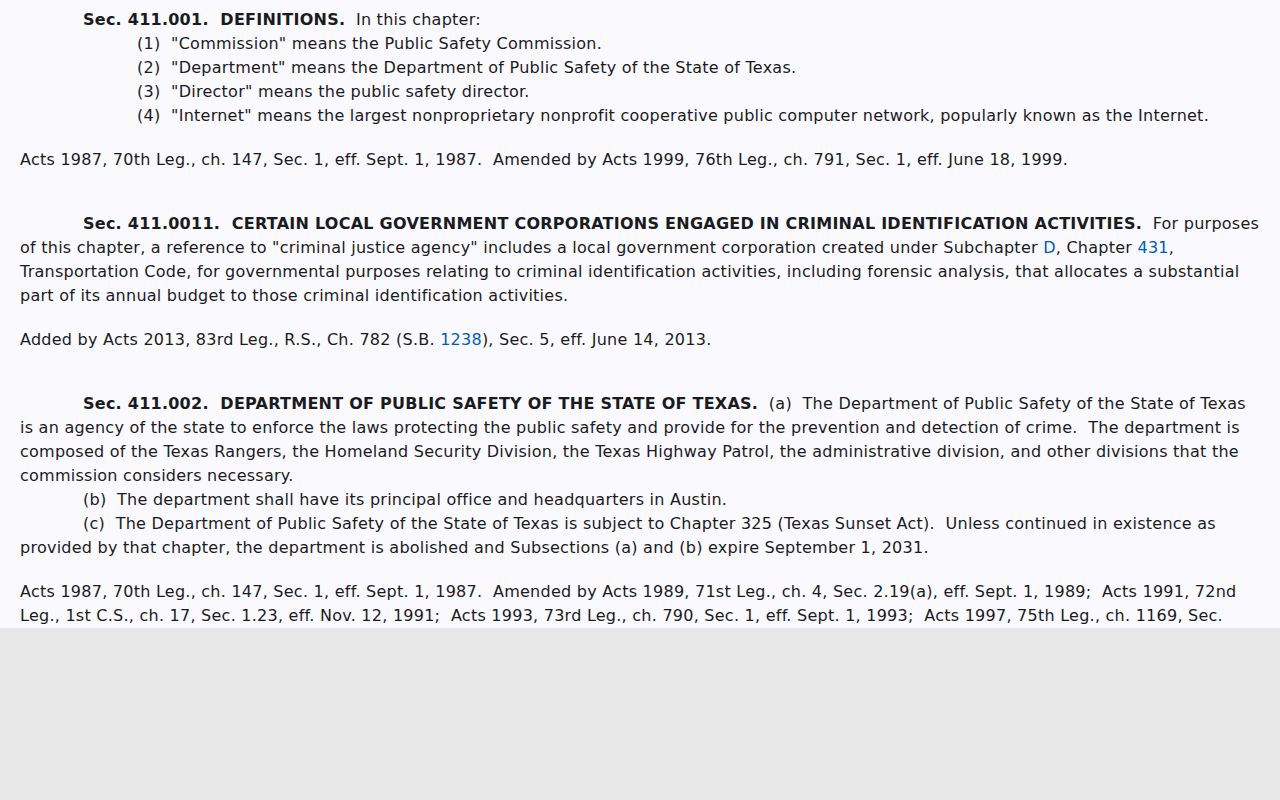
The state-law view reinforces that a public Lee County registry entry should not be read as a full criminal-history file.
Lee County Registry Fields Kept Private
Public does not mean unlimited. DPS states that Social Security numbers, driver's-license numbers, phone numbers, online identifiers, employer identity and contact details, and victim-identifying information are withheld. A court may also order some juvenile registration information nonpublic. The absence of those fields is a privacy rule, not a sign that the public profile failed to load.
The official DPS registry and criminal-history FAQ explains the boundary between public and nonpublic data.
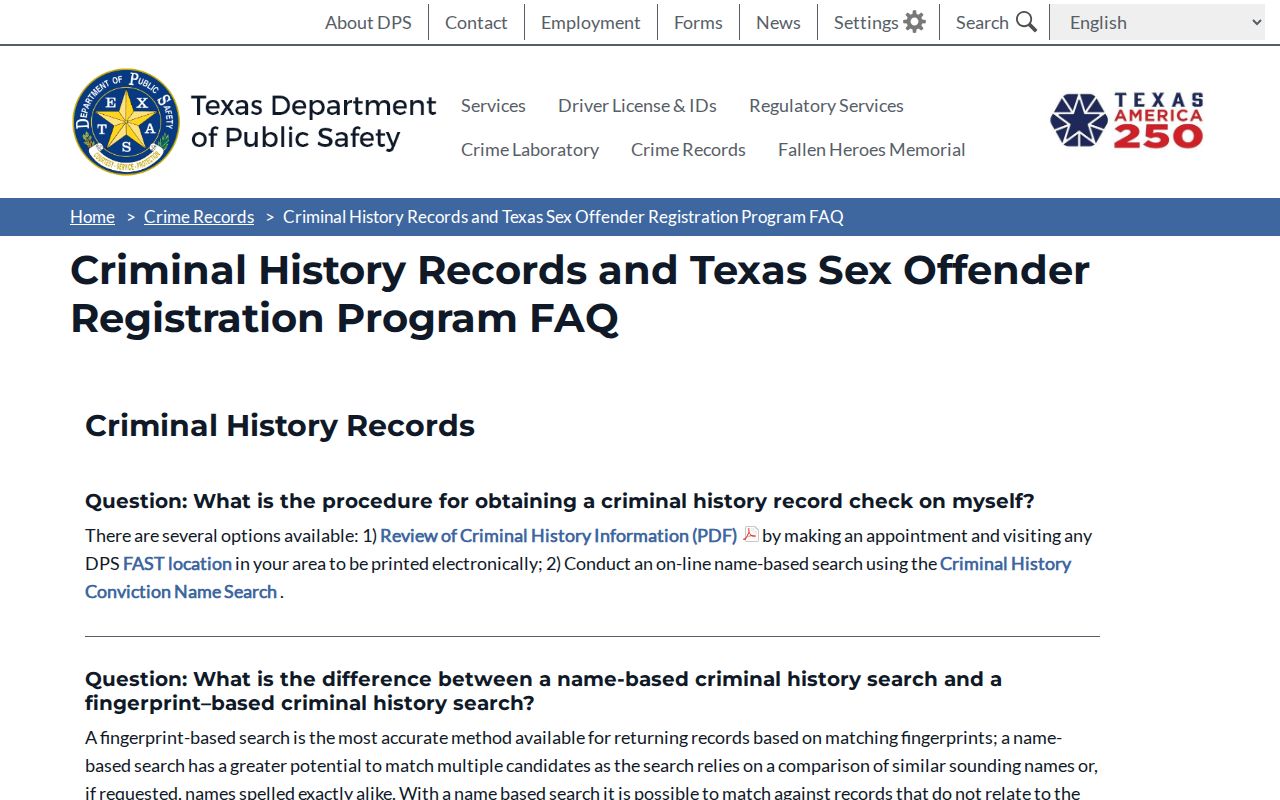
The state explanation confirms that protected fields do not belong in a public Lee County registry profile.
That boundary matters when matching a Lee County result. Use the facts DPS lawfully displays and do not seek protected identifiers from another source to build a private dossier. If a public entry looks wrong, note the profile and contact the registering agency or DPS. The registry office can check its own data flow, while the court holds the underlying judgment. A searcher should not fill gaps with guesses.
Registration Requirements and Levels in Texas
Texas duration is based on the offense and Chapter 62, not on a simple public Tier I, II, or III label. Many reportable convictions require lifetime registration. Other reportable convictions or adjudications generally require registration for ten years after release, discharge, or the end of supervision, as calculated under the statute. A risk level shown on a profile does not replace that legal duration rule.
| Texas Category | General Duration | Verification |
|---|---|---|
| Lifetime-reportable offense | Lifetime, subject to statutory exceptions or deregistration mechanisms | Frequency set by Chapter 62 and profile status |
| Other reportable conviction or adjudication | Generally ten years after the statutory release or discharge point | Commonly annual |
| Certain repeat or lifetime registrants | As the governing offense provision requires | May include a 90-day cycle |
| Transient or special circumstance | Statute-specific | Different reporting duties may apply |
Read the profile and Texas Code of Criminal Procedure Chapter 62 together when duration is important. Ask the registration authority about a Lee County compliance fact rather than guessing from a label.
NSOPW Extends Lee County Searches
The National Sex Offender Public Website, run by the U.S. Department of Justice, adds public registry data from participating jurisdictions across the country. It is useful when a person may have lived outside Texas, when an address lies near a state line, or when a Lee County name search suggests a past location elsewhere. NSOPW does not replace the Texas profile for local registration detail.
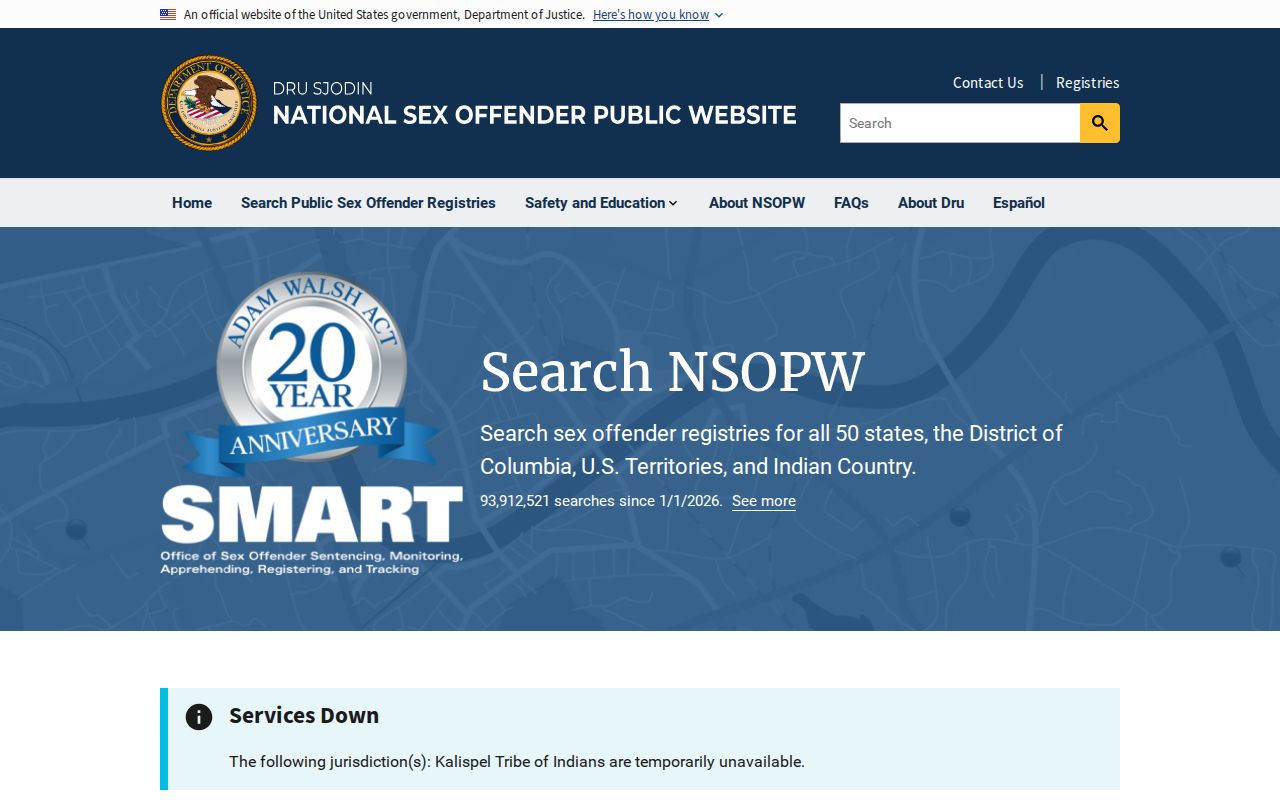
The national interface provides a wider first pass, while the Texas DPS record remains the direct source for a Lee County entry.
Compare results with care. State systems can use different layouts and update schedules. Open the source profile linked by a national result, check the registering agency, and compare current dates. If a search crosses jurisdictions, repeat likely name variants and geographic facts rather than assuming one empty result settles the question.
Lee County Residency Rule Limits
Texas does not impose one universal distance-based residency ban on every registrant. Local ordinances and supervision conditions can add distinct limits, but the research did not locate a Lee County-wide distance rule that supports quoting a fixed number. A map result therefore shows a reported location. It does not, by itself, decide whether that location violates a rule.
If the concern involves a specific Lee County address, first verify the current profile. Then ask the sheriff about registration compliance. Questions tied to probation or parole conditions belong with the supervising authority, and ordinance questions belong with the city or county body that adopted the rule. This route prevents a map marker from being mistaken for a legal conclusion.
Lawful Use and Community Notification
Lee County registry information supports community awareness and safety planning. Under Article 62.056, local law enforcement performs required school and community notices, while DPS makes the authorized statewide data public under Article 62.005. A formal notice and a self-run search are not the same event, so the lack of a notice does not mean a Lee County registry search has no results.
Use a profile to make calm, lawful safety choices. Do not post claims beyond what the official record states. Suspected noncompliance should be reported to the Lee County Sheriff's Office or DPS, with emergencies directed to 911. Registry information is not permission for personal enforcement or confrontation.
Misuse is unlawful: Texas DPS warns that registry information may not be used to threaten, intimidate, or harass. Misuse can lead to criminal prosecution or civil liability under Texas law, while Chapter 62 governs the public registry.